- About Us
- Scientific Philosophy and Ethical Foundations
- Bioeconomy, Nutrieconomy, and Livelihood Integration
- One Health and Systems Integration
- Digital Innovation and Responsible Use of AI
- Vision and Mission
- Advisory Committee
- National Footprint and Global Engagement
- International Society for Ethnopharmacology
- Major Initiatives & Flagship Programs
- Awards and Recognition
- Systems Ethnopharmacology and Sustainable Bioresources (SESB)
About Us
↑

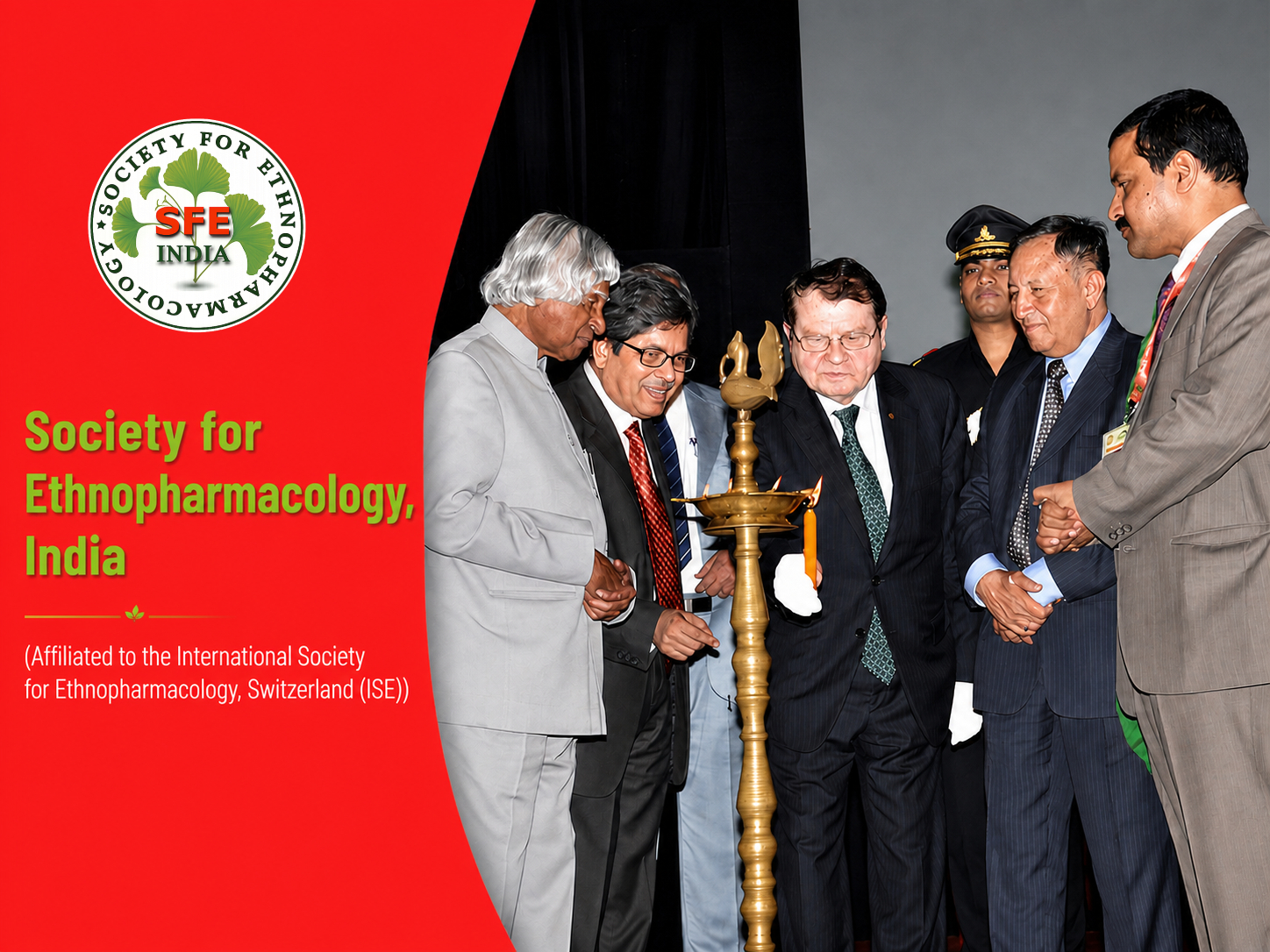
Beginning with the inspiration from the vision of Dr. A. P. J. Abdul Kalam, the former President of India, The Society for Ethnopharmacology, India (SFE-India) was established as a non-profit scientific organization, in the year 2012 by Prof. Pulok Kumar Mukherjee. The Society for Ethnopharmacology, India has been registered with the Government of India since its inception, and it is an officially affiliated member society of the International Society for Ethnopharmacology (ISE), Switzerland.
SFE-India was created to develop and validate ethnopharmacology and traditional medicine through scientific evidence-based validation, inter-disciplinary research, and through both ethical governance and policy engagement. In order to promote the responsible and collaborative development of traditional medicine and medicinal plants through knowledge sharing, networking, and cooperation among academics /researchers/clinicians/traditional practitioners/industry leaders/policy makers/other interested parties, the SFE-India will be working towards advancing ethnopharmacology and traditional medicine globally.
The guiding philosophy and vision of SFE-India is a long-term goal that aims to “globalize” local knowledge and “localize” global technology, facilitating sustainable development and ethics-driven innovations in the field of traditional medicine. Additionally, the mission of SFE-India is to promote the scientifically validated documentation and dissemination of traditional medical knowledge and to strengthen India’s position within the international herbal/natural product ecosystem by establishing well-defined frameworks for research, regulation, and the development of commercially viable traditional medicines.
Scientific Philosophy and Ethical Foundations
↑
SFE-India is in favor of using the traditional medicine practices in a way that they may be used sustainably and with respect for the cultures that have developed them. In the context of the planetary health model, we consider that community livelihoods, human health, and environmental sustainability are all interrelated outcomes.
The society supports research activities related to AYUSH frameworks and national/international objectives such as those established by WHO and UN SDG’s. Equally important is our adherence to international governance mechanisms, specifically the CBD and Nagoya Protocol on access & benefit sharing (ABS), since both provide legal/ethical standards for the use of biological materials and their associated TK. We support the CARE principles for indigenous data governance (collective benefit, authority to control, responsibility, ethics) in recognition that data sovereignty/cultural integrity are critical elements of ethically responsible research.
Bioeconomy, Nutrieconomy, and Livelihood Integration
↑
SFE-India is working to close the gap of little interest in, or lack of knowledge about, the economic aspects (value chain and livelihood) of traditional medicinal plant use. The focus will be to expand research into the areas of the Bio-Economy and Nutri-Economy that include Food-as-Medicine Systems, Functional Foods, Traditional Diets and Nutritionally Adaptive Crops.
Traditional food systems have long contained a deep understanding of nutritional and therapeutic principles. These principles are largely unappreciated in contemporary scientific thinking. In addition to its interest in traditional food systems, SFE-India will also explore and promote innovative and sustainable harvesting practices, circular and regenerative production systems, traceability, and quality assurance. Emerging examples of new approaches in these areas include blockchain-based traceability; community-led conservation models; and open-source/transparent supply chains that improve authenticity, safety, environmental accountability and fair benefit sharing.
One Health and Systems Integration
↑
SFE-India is committed to promoting “One Health” as an integrated policy and scientific approach. As human health cannot be separated from the health of animals, the health of our environment, or the balance of ecosystems, we must find integrated solutions to challenges such as zoonoses, drug-resistant microorganisms, climate-induced health problems, and food shortages.
The society actively supports all kinds of interdisciplinary research that connects ethnopharmacology with veterinary medicine, ecology, conservation biology, and public health. The traditional knowledge systems are built around similar principles (of integration); through systems ethnopharmacology, we provide the scientific language and methodology to evaluate and validate these systems in a responsible way.
Digital Innovation and Responsible Use of AI
↑
A characteristic element of SFE-India is its interest in digital and computational technologies, such as artificial intelligence (AI), machine learning, predictive modeling, knowledge graphs, and data mining. The use of this technology by SFE-India has made it one of the first organizations to apply this type of methodology to ethnopharmacological research.
SFE-India does not view AI as a substitute for traditional scientific knowledge or experimental methods; rather, it considers AI an integrated tool that enhances the analysis of large volumes of data on biology, ecology, and culture, provided that those data are handled ethically. Examples of how the organization uses AI include developing new natural products, predicting potential toxicity, identifying resources resilient to environmental change, and supporting decision-making through policy-relevant applications. Therefore, the organization treats methodological transparency, interpretability, and ethical data management as unyielding standards.
Vision and Mission
↑
Vision
To globalize local knowledge and localize global technologies, fostering sustainable development and ethical innovation in traditional medicine.
Mission
To promote the scientific validation, documentation, and dissemination of traditional medical knowledge, and to strengthen India’s leadership in the global herbal industry through frameworks for research, regulation, and responsible commercialization.
Advisory Committee
↑
The SFE-India is guided by a distinguished Executive and Advisory Committee comprising eminent scientists, academicians, clinicians, industry leaders, and policy experts from India and abroad. The Committee provides strategic direction, ensures scientific rigor, and fosters ethical, inclusive, and sustainability-driven research in traditional medicine and natural products. Through collaborative leadership, it strengthens national and global engagement to advance ethnopharmacology as a credible and impactful scientific discipline (Annexure 3).
Core Objectives
- Scientific Advancement – Promote interdisciplinary and translational research in ethnopharmacology, pharmacognosy, phytochemistry, and traditional-medicine-inspired drug discovery
- Knowledge Dissemination – Organize congresses, seminars, workshops, and training programs bridging academia, industry, and communities
- Capacity Building – Empower students, young scientists, and entrepreneurs through mentorship, skills development, and career support
- Ethical Standardization – Advocate quality, safety, and efficacy standards aligned with global guidelines
- Sustainability and Biodiversity – Promote conservation, sustainable utilization of MAPs, and medical pluralism
- Entrepreneurial Ecosystem – Facilitate start-ups, innovation, and ethno-entrepreneurship through industry–academia interaction
- National and International Collaboration – Strengthen partnerships for traditional medicine and medicinal plant research
- Recognition of Excellence – Honor outstanding contributions through prestigious awards
- Publications and Outreach – Publish journals, newsletters, books, and digital content; organize initiatives such as Jigyasha and international webinars
National Footprint and Global Engagement
↑
SFE-India’s Local Chapters serve as dynamic regional hubs that promote academic engagement, research collaboration, and capacity building in ethnopharmacology and sustainable bioresources. Led by dedicated Chapter Coordinators and supported by active members, they organize seminars, workshops, student outreach activities, and scientific discussions aligned with the Society’s mission. These chapters play a vital role in strengthening grassroots participation while connecting local expertise to national and global initiatives.
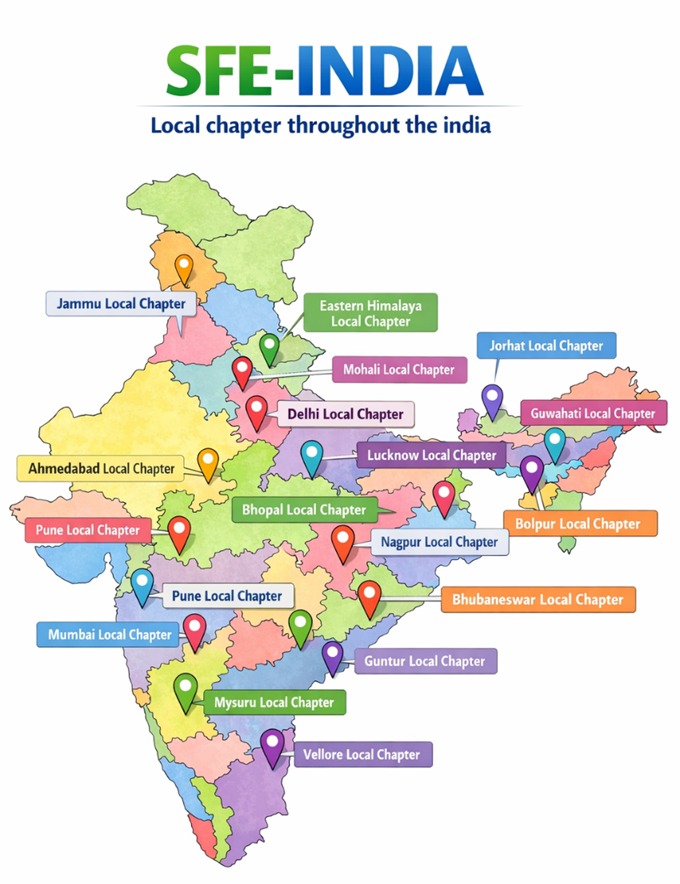
From its headquarters in Kolkata, SFE-India coordinates 18 regional chapters (Annexure 1) and more than 3,000 active members across India. These chapters collaborate with universities, government agencies, research laboratories, NGOs, and industries to promote training, research, and societal outreach.
Internationally, SFE-India partners with organizations and universities across the USA, Europe, and Asia, enabling exchange programs, collaborative projects, and active participation in ISE’s global conferences. Over the last fourteen years, SFE-India has emerged as one of the most influential national platforms reimagining ethnopharmacology through scientific congresses, capacity-building initiatives, policy engagement, and advocacy.
International Society for Ethnopharmacology
↑
International Society for Ethnopharmacology is a collaborative, interdisciplinary group of scientists – anthropologists, pharmacists, pharmacologists, ethnobotanists, phytochemists, and others – all fascinated by the study of the global use of medicines. ISE is particularly concerned about understanding the medicinal uses of plants in traditional societies. The ISE promotes a critical discussion between everyone interested in local and traditional knowledge on medicinal, food and toxic plants and their past, present and future.
In many regions of the world, such knowledge is changing fast and ongoing concern of many members of the society is both a dialogue with the owners of traditional knowledge and to find ways to ascertain that such knowledge is passed on to future generations. Knowledge about traditional drugs/medicines is put into practice in different cultural settings in daily health care, nutrition, veterinary, hunting, pest control etc.
Major Initiatives & Flagship Programs
↑
a) International Congresses & Scientific Conventions
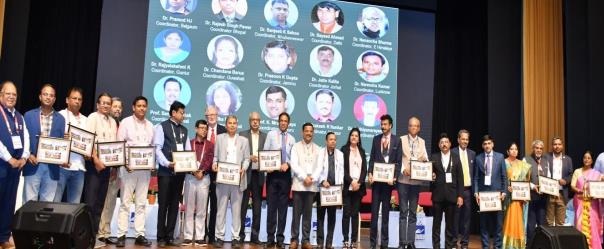
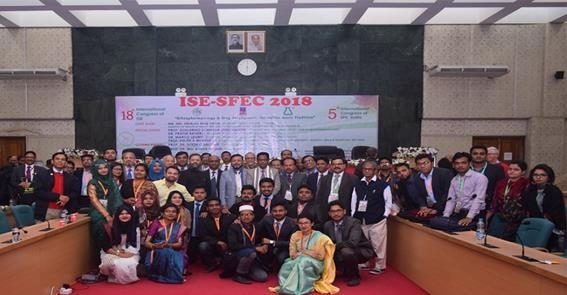
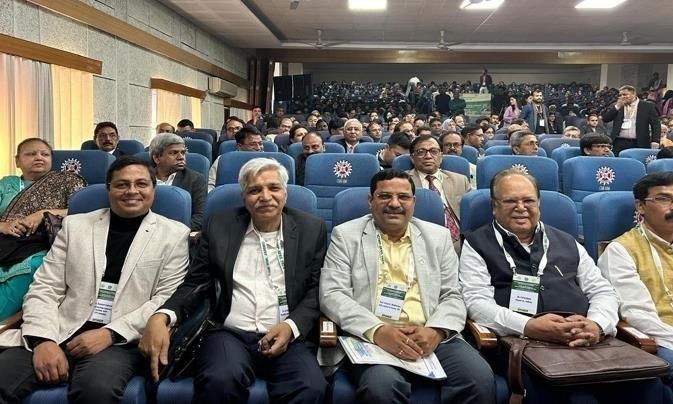
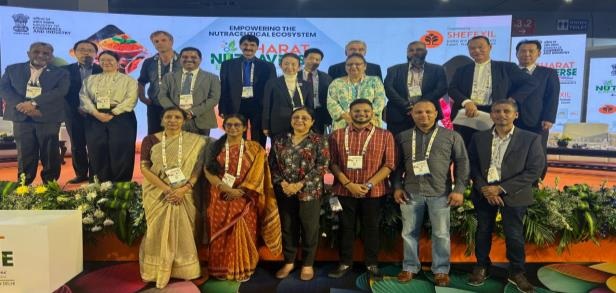
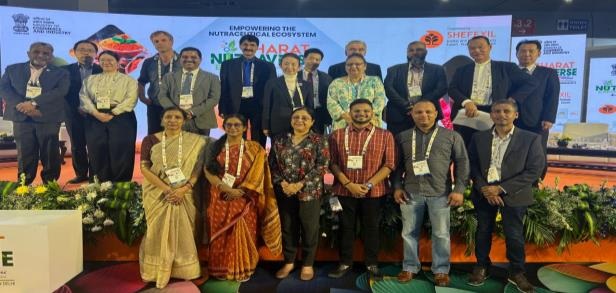
SFE-India has organized more than 25 international and national congresses over the last fourteen years, creating a vibrant platform for dialogue on traditional medicine, sustainability, regulatory science, and translational research. More than 15,000 stakeholders including researchers, academicians, healthcare professionals, industry leaders, policymakers, and students have participated in these events, strengthening collaborations and advancing ethnopharmacology across India and beyond.
The Society’s annual International Congress has evolved into one of the most respected scientific gatherings in the field, facilitating interdisciplinary exchange and fostering partnerships among scientists, traditional knowledge holders, healers, public-health experts, and industry representatives.
- 12th International Congress of Ethnopharmacology, Kolkata (2012)
- 1st International Congress of the Society for Ethnopharmacology, Chennai (2014)
- 2nd International Congress of the Society for Ethnopharmacology, Nagpur (2015)
- 3rd International Congress of the Society for Ethnopharmacology, Raipur (2016)
- 4th International Congress of the Society for Ethnopharmacology, Surat (2017)
- 5th International Congress of the Society for Ethnopharmacology and 18th International Congress of ISE, Dhaka (2018)
- 6th International Congress of the Society for Ethnopharmacology, Imphal (2019)
- 7th International Congress of the Society for Ethnopharmacology, New Delhi (2020)
- 8th International Congress of the Society for Ethnopharmacology, Pune (2021)
- 9th International Congress of the Society for Ethnopharmacology, Mysuru (2022)
- 10th International Congress of the Society for Ethnopharmacology and 22nd International Congress of ISE, Imphal (2023)
- 11th International Congress of the Society for Ethnopharmacology and International Conference, Jammu (2024)
- 12th International Congress of the Society for Ethnopharmacology, Belagavi (2025)
- 13th International Congress of the Society for Ethnopharmacology, Mohali (2026)
- 14th International Congress of the Society for Ethnopharmacology and 26th International Congress of ISE, Kolkata (2027)
These events foster interdisciplinary exchange among scientists, traditional healers, policymakers, entrepreneurs, and industry leaders while promoting evidence-based approaches for the advancement of traditional medicine and natural products research.
b) Traditional Healers’ Conclave
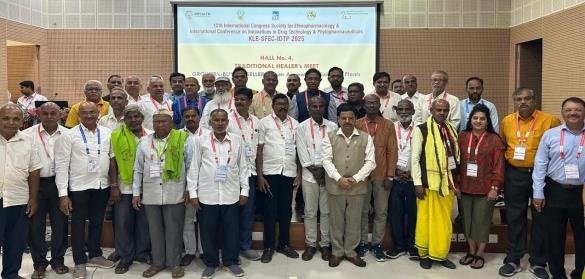
Recognizing traditional healers as custodians of indigenous knowledge, SFE-India regularly organizes Traditional Healers’ Conclaves that provide a unique platform for interaction between knowledge holders, researchers, healthcare professionals, and policymakers.
The initiative promotes:
- Ethical documentation of traditional knowledge
- Scientific validation of indigenous practices
- Access and benefit-sharing mechanisms
- Conservation of medicinal plants and bioresources
- Knowledge preservation for future generations
The conclave strengthens the bridge between grassroots knowledge systems and modern scientific institutions, ensuring that traditional wisdom is respected, preserved, and responsibly integrated into contemporary healthcare frameworks.
c) i-Connect Business Meet
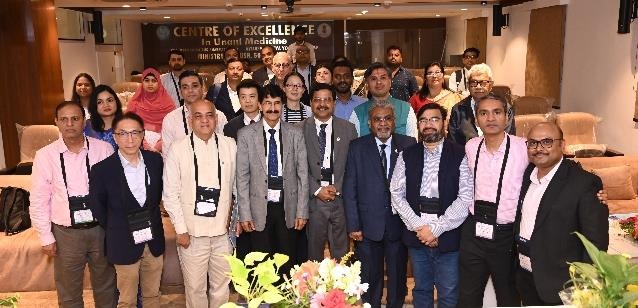
The i-Connect Business Meet serves as a dedicated platform for connecting academia, research institutions, entrepreneurs, investors, start-ups, and industry stakeholders working in medicinal plants, natural products, nutraceuticals, and traditional medicine.
Through structured interactions and networking opportunities, i-Connect supports:
- Start-ups and MSMEs
- Technology transfer initiatives
- Industry–academia collaborations
- Commercialization of research outcomes
- Market-ready innovations and entrepreneurship
By fostering meaningful partnerships and facilitating knowledge exchange, the initiative helps transform scientific discoveries into sustainable products, services, and enterprises that generate both societal and economic impact.
d) Jigyasha – A Popular Scientific Writing Competition
Jigyasha is a flagship science communication initiative of SFE-India that encourages students, young researchers, and science enthusiasts to develop their scientific writing and communication skills. The competition serves as a platform to nurture curiosity, critical thinking, and the ability to present scientific concepts in a clear and socially relevant manner.
The programme fosters:
- Scientific curiosity and analytical thinking
- Ethical awareness and responsible communication
- Interdisciplinary learning and knowledge integration
- Science communication and writing skills
- Exposure to real-world ethnopharmacology and traditional medicine research
Through Jigyasha, SFE-India inspires the next generation of scientists and innovators to engage with scientific inquiry while strengthening the connection between research, society, and sustainable development.
e) FSFE – Fellow of the Society for Ethnopharmacology
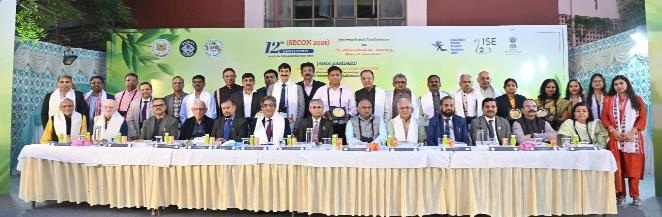
The Fellow of the Society for Ethnopharmacology (FSFE) is one of the highest honors conferred by SFE-India. The fellowship recognizes distinguished scientists, academicians, clinicians, industry professionals, and innovators who have demonstrated exceptional contributions to ethnopharmacology, medicinal plant research, traditional medicine, natural product sciences, and allied disciplines.
The FSFE distinction acknowledges sustained excellence in scientific research, education, leadership, innovation, and service to society. Recipients are recognized for their commitment to advancing evidence-based traditional medicine, fostering interdisciplinary collaboration, and promoting ethical and sustainable utilization of bioresources.
Through this prestigious fellowship, SFE-India celebrates outstanding achievements while inspiring future generations of researchers and professionals to contribute meaningfully to the growth and global recognition of ethnopharmacology and traditional healthcare systems.
Awards and Recognition
↑
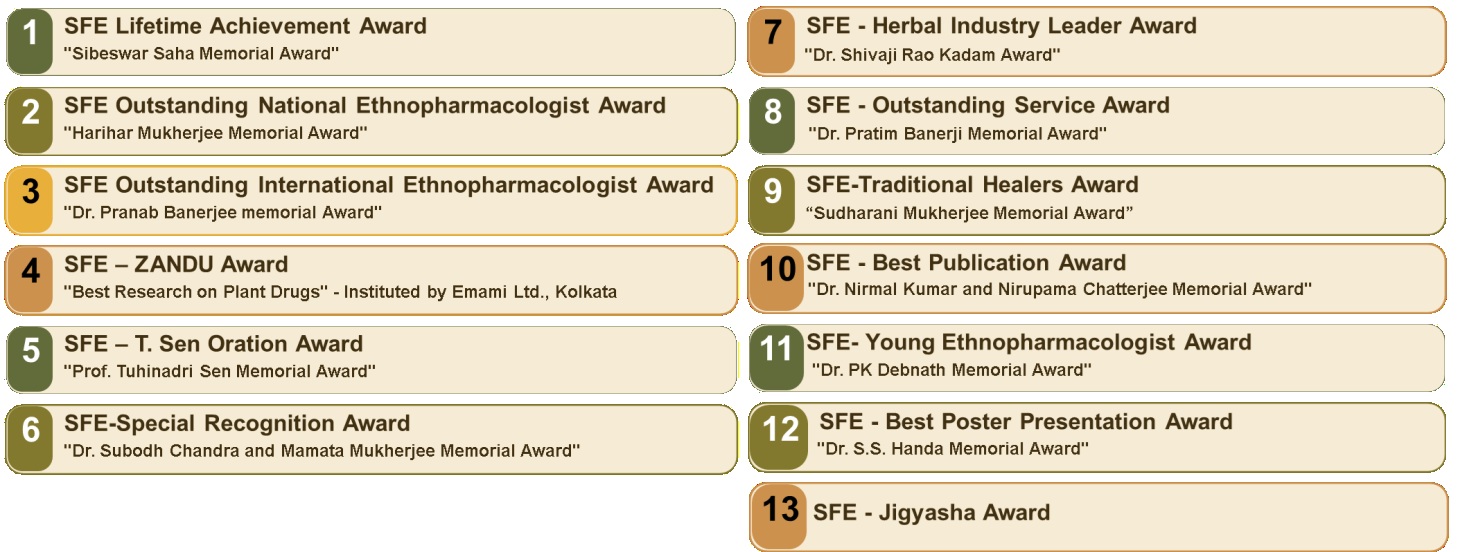
Society for Ethnopharmacology, India recognizes outstanding contributions made by researchers, scientists, academicians, healthcare professionals, and technology innovators through a series of prestigious awards presented during the annual International Congress of the Society for Ethnopharmacology.
Systems Ethnopharmacology and Sustainable Bioresources (SESB)
↑
Bridging Ancient Wisdom and Modern Science
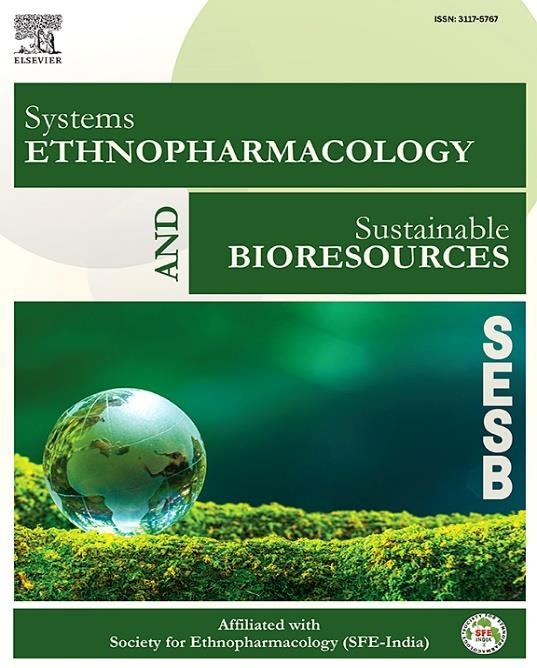
Systems Ethnopharmacology and Sustainable Bioresources (SESB) is an international peer-reviewed scientific journal affiliated with the Society for Ethnopharmacology (SFE-India). The journal serves as a multidisciplinary platform dedicated to advancing research at the intersection of ethnopharmacology, sustainability science, ecological stewardship, and systems-based approaches to healthcare and natural products research.
Aim & Scope
Systems Ethnopharmacology and Sustainable Bioresources (SESB) is an interdisciplinary, peer-reviewed journal dedicated to advancing research at the intersection of ethnopharmacology, ecological stewardship, sustainability science, and modern pharmacology through a systems-thinking lens. The journal promotes a holistic understanding of how medicinal plants, natural products, traditional knowledge systems, and traditional practices operate within dynamic biological, ecological, socio-economic, and cultural contexts that shape human and planetary health.
SFE-India is not merely preserving the past. It is actively shaping a future where traditional wisdom, scientific integrity, and entrepreneurial courage converge to deliver globally credible, socially inclusive, and environmentally sustainable healthcare solutions.